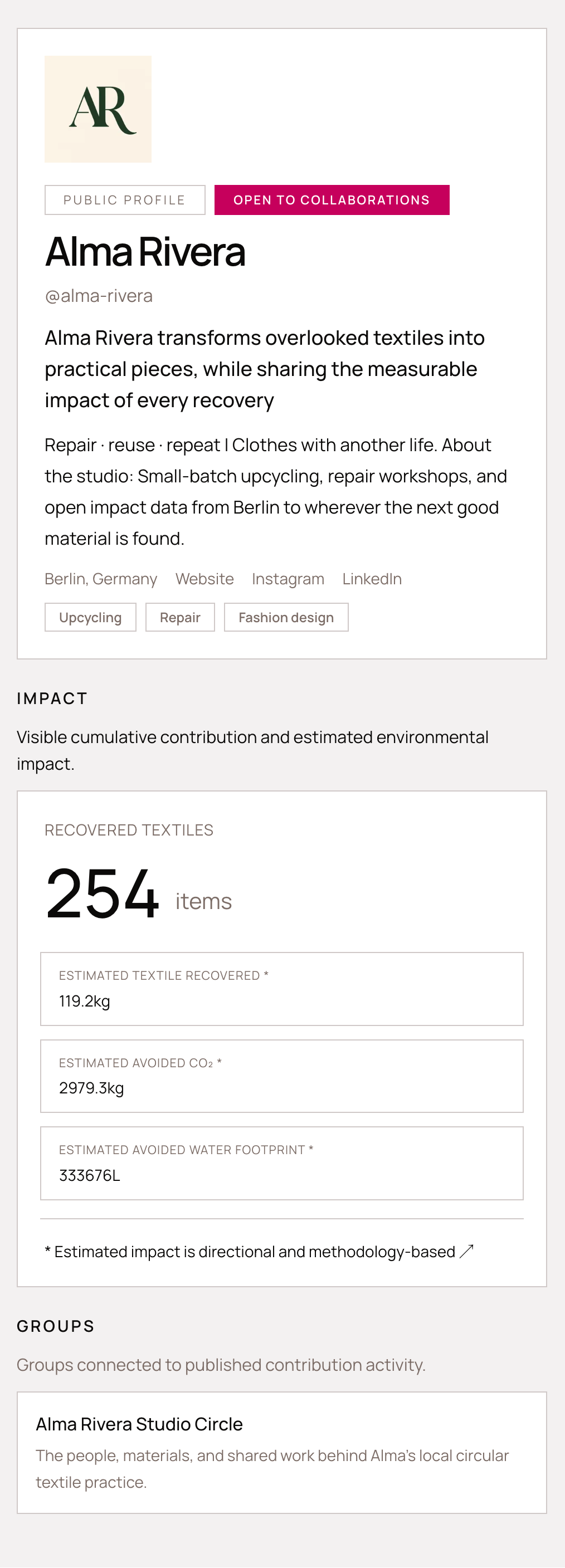
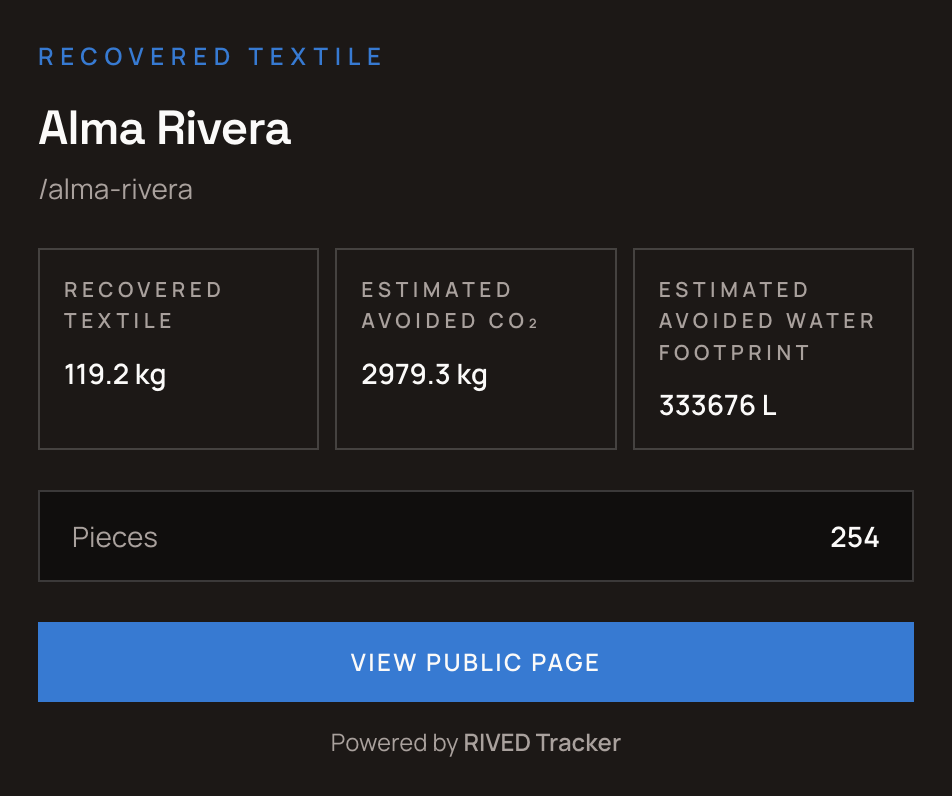
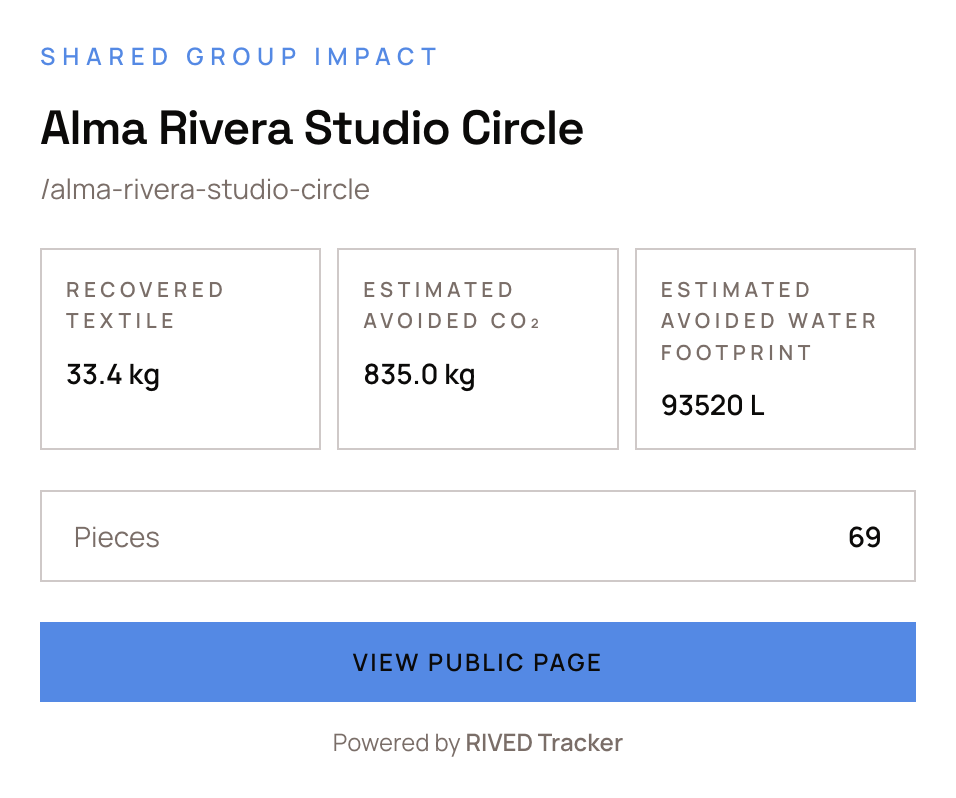
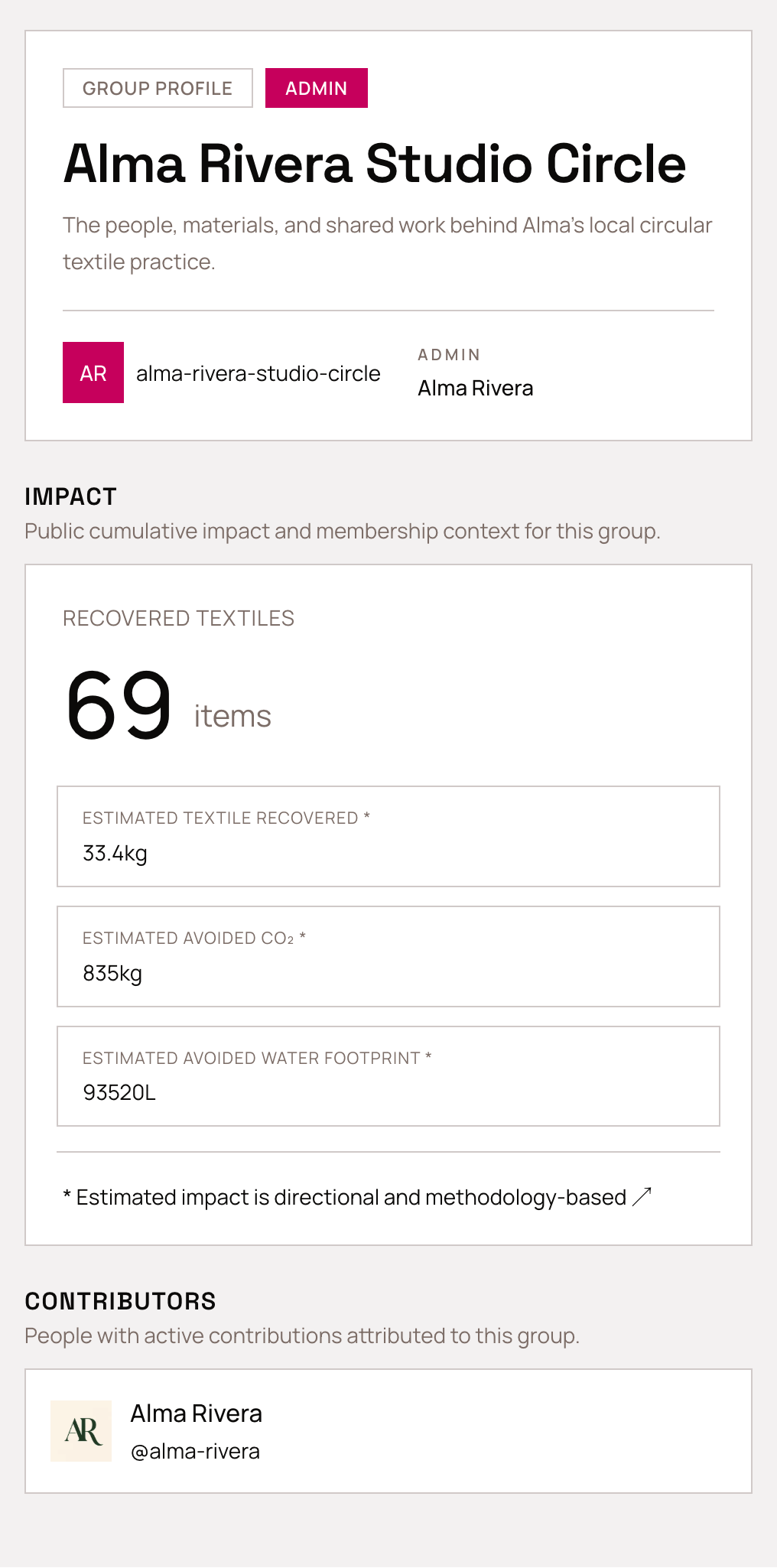
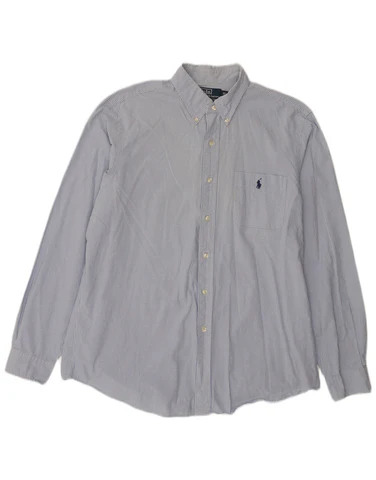
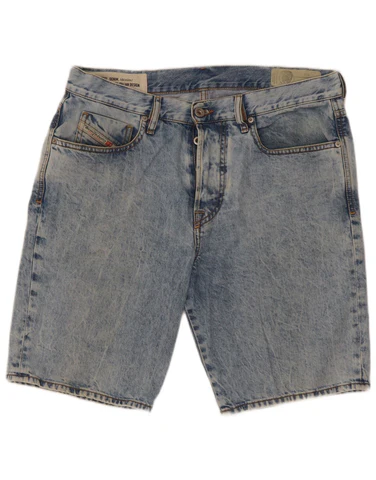
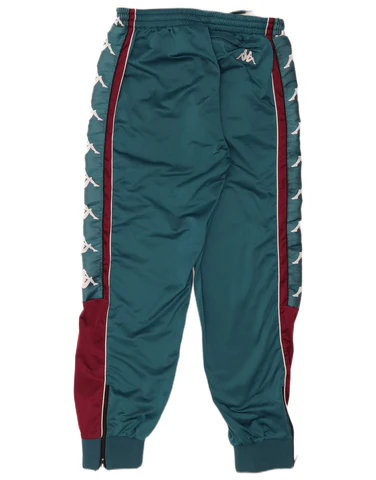
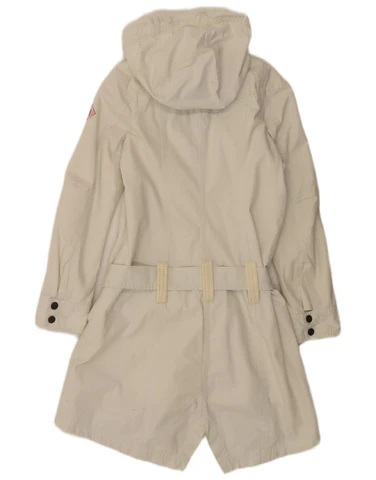
We use two figures from independent academic research: 25 kg of CO2e avoided per kilogram of clothing reused, and a water-savings estimate based on the fiber composition typically found in donated and reused clothing.
Why these numbers.
A 2022 study by INTEXTER (Universitat Politècnica de Catalunya) physically broke down hundreds of kilograms of real donated garments to measure their actual fiber content, rather than assuming a standard fabric. They found cotton and polyester together make up roughly 80–88% of reused and recyclable clothing, and used that real composition data to calculate the carbon savings of reuse: 25 kg of CO2e per kilogram. We use their figure because it's grounded in measured material composition, not assumed averages.
Water savings are estimated using published water-intensity factors for the dominant fibers found in that same composition data — cotton is the largest driver, since cotton cultivation and processing is far more water-intensive than synthetic fiber production.
Water intensity varies strongly by fiber, so we model water savings using a material-based factor rather than one universal number. For cotton — the dominant fiber in reused and recycled clothing — we use a global average water footprint of roughly 10,000 liters per kilogram, based on the water footprint research of Hoekstra and Chapagain, the foundational academic source for cotton water-use figures used across the industry.
That average hides real variation: depending on where cotton is grown and how it's irrigated, the actual figure can range from around 2,000 to over 20,000 liters per kilogram. We use the global average as a starting estimate, not a precise figure for any individual piece.
What this means for your number.
We calculate from the weight of what you log — not a guess at material type for every single piece. This keeps logging fast and lets you upload in bulk. The trade-off: your number is a strong estimate, not an item-by-item calculation. As we develop the model further, more detailed input (what you made, what it's made from) will let us calculate more precisely.
Limitations
We use an avoided-impact approach: benefit comes from displacing the production of new material, not from a full lifecycle footprint of the recovered piece.
Our estimate covers production, not the full life of a garment — cradle-to-gate, up to the point a material is ready to use. It doesn't include transport, your own labor, or what happens after.
Measuring the impact of reuse and circularity is a developing area of research, and our model reflects where that research currently stands.
Estimated CO₂ impact
Baseline formula: Estimated CO2 avoided (kg CO2e) = recovered textile (kg) × CO2 savings factor (kg CO2e/kg)
Estimated water savings
Baseline formula: Estimated water saved (L) = recovered textile (kg) × virgin material water factor (L/kg) × replacement rate
Sources
Carrera, E. et al. (2022). Fiber composition and CO2 savings analysis of donated textiles, Universitat Politècnica de Catalunya (INTEXTER).
Chapagain, A.K., Hoekstra, A.Y., Savenije, H.H.G., & Gautam, R. (2006). The water footprint of cotton consumption. Ecological Economics / UNESCO-IHE Value of Water Research Report Series No. 18.